My Story
Every baddie has an origin story, here’s mine
I
They called me Barrel Bear
Growing up in a small Cornish town, I was always a big, strong girl. I joined the army cadets and became the regional shot put champion. Although nobody called that sporty, least of all me. Sport, as I understood it then, belonged to the slim girls who loved PE. During which, I used to hide in the changing room showers to avoid it.
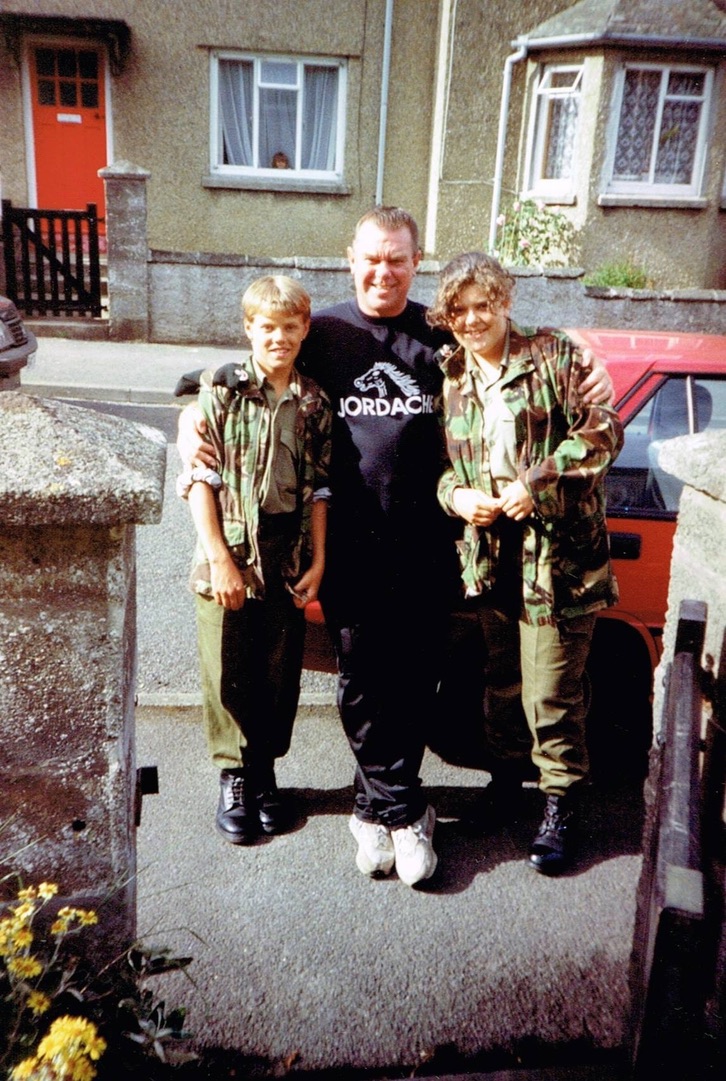
Having the surname Bear meant I got called all sorts at school. Barrel Bear was the one that stuck, and being the cadet who could launch a heavy lump of metal further than anyone else probably didn’t help.
II
The surgery that never happened
I became a young mum. I had my first daughter at 20, and by then I weighed 20 stone. By 30 I was pregnant with my third daughter. But, I couldn’t see how magnificent my body already was for bringing these amazing little women into the world.
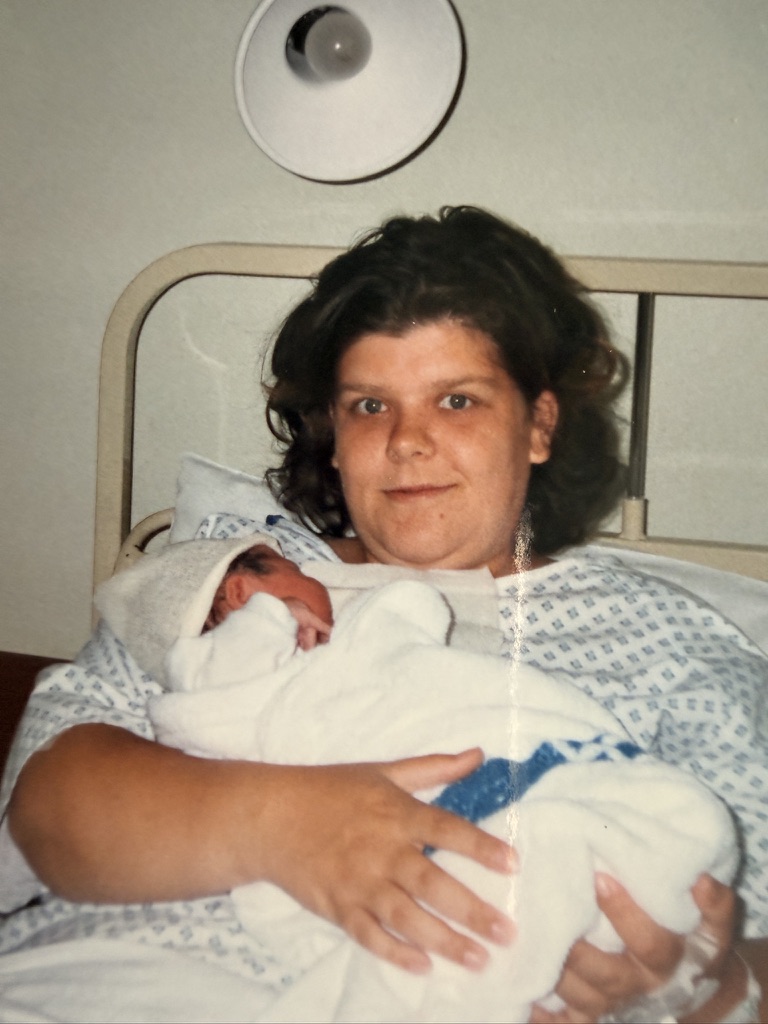
Not long after my youngest was born, in 2009 I lost my mum, she was only 55. Understandably I went to my GP because I was struggling with depression. However, the conversation quickly turned to my weight.
That started a three-year process towards NHS weight loss surgery. You had to complete at least a two-year pathway to show commitment: seeing a dietitian and an exercise specialist, and a psychological assessment. There were two options, a gastric band or a gastric bypass. Given my mental health, the psychologist said I shouldn’t have the bypass, it was too extreme. The consultant overruled him. In his view a band was pointless; I was too heavy to even leave the obese category with one. He put me forward for the bypass.
All the while I was half way through a two-year Master’s in Fine Art, so I arranged the surgery for the summer break. For two weeks beforehand I lived on nothing but milk and yoghurt to shrink my liver ready for surgery. That summer I was pretty cranky avoiding barbecues and anything social.
The night before, with my hospital bag packed, I was upstairs while everyone ate dinner downstairs. The phone rang. The surgeon was unwell. The operation was cancelled and rescheduled for a few weeks later.
I was devastated. But it gave me pause. Was this my sign to think it through again? I went down a rabbit hole on the long-term consequences: hair loss, malnutrition, and more. I asked myself whether it was really worth operating on perfectly healthy organs in the pursuit of fat loss.
I cancelled the surgery.
Interlude: The fat female body
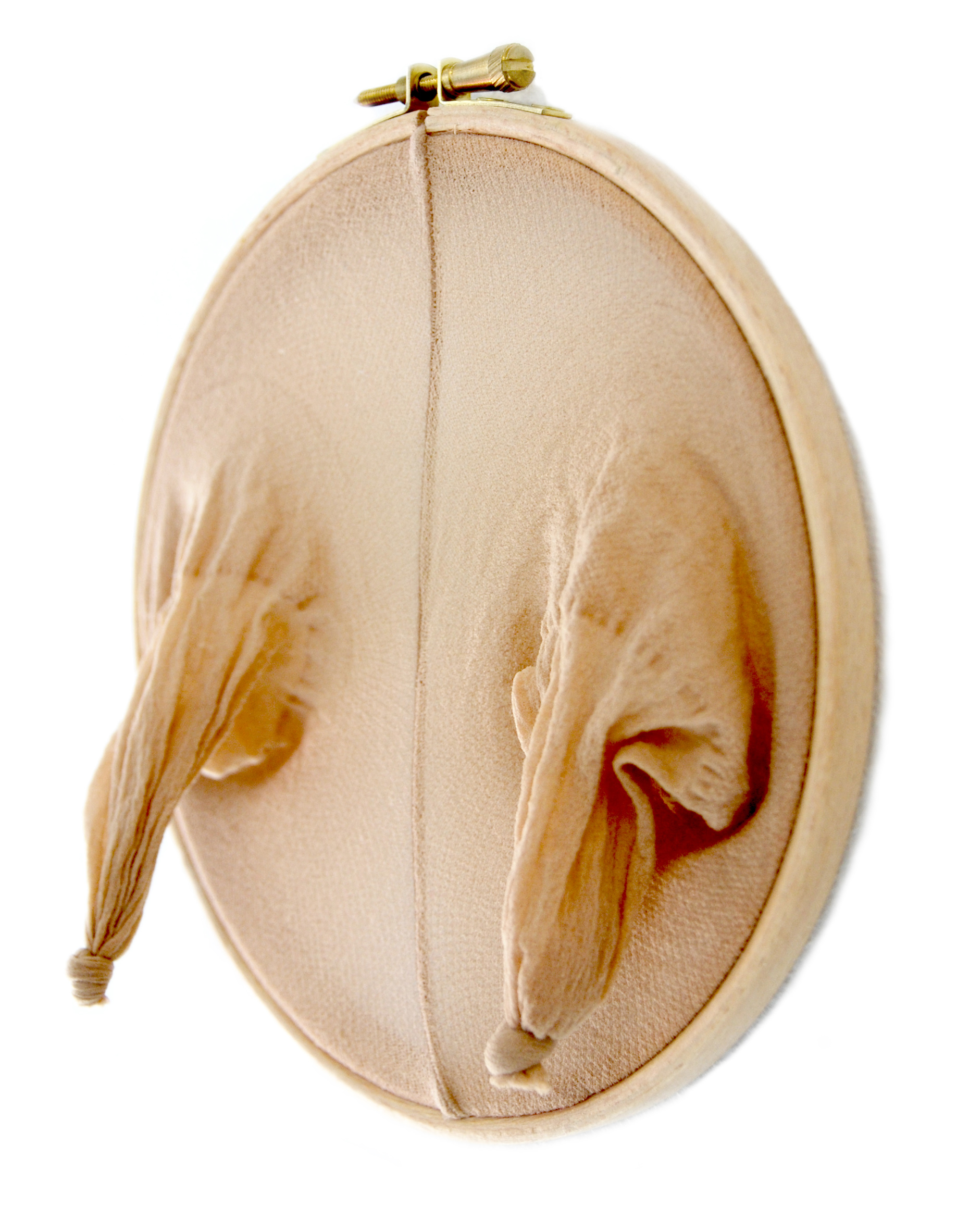
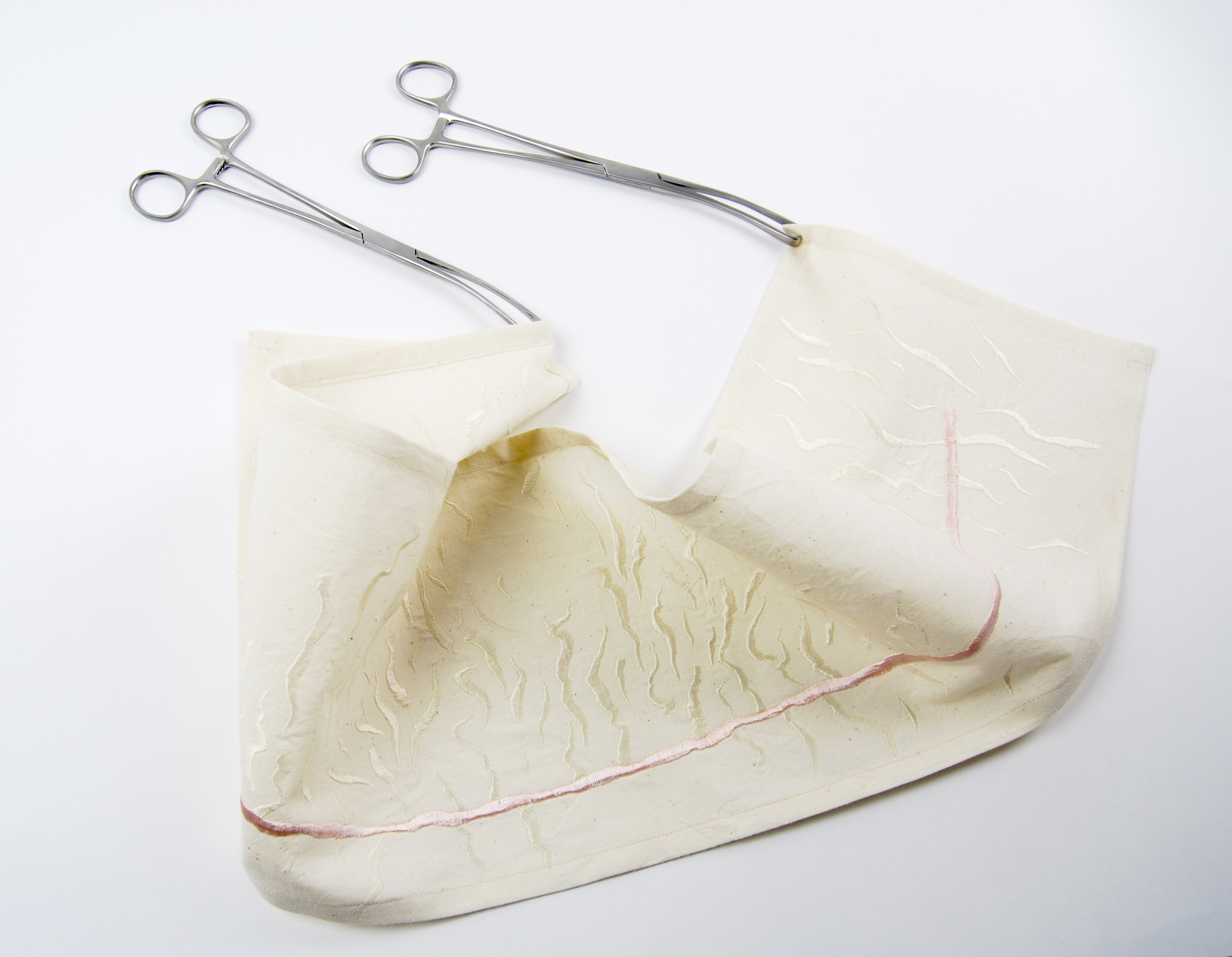
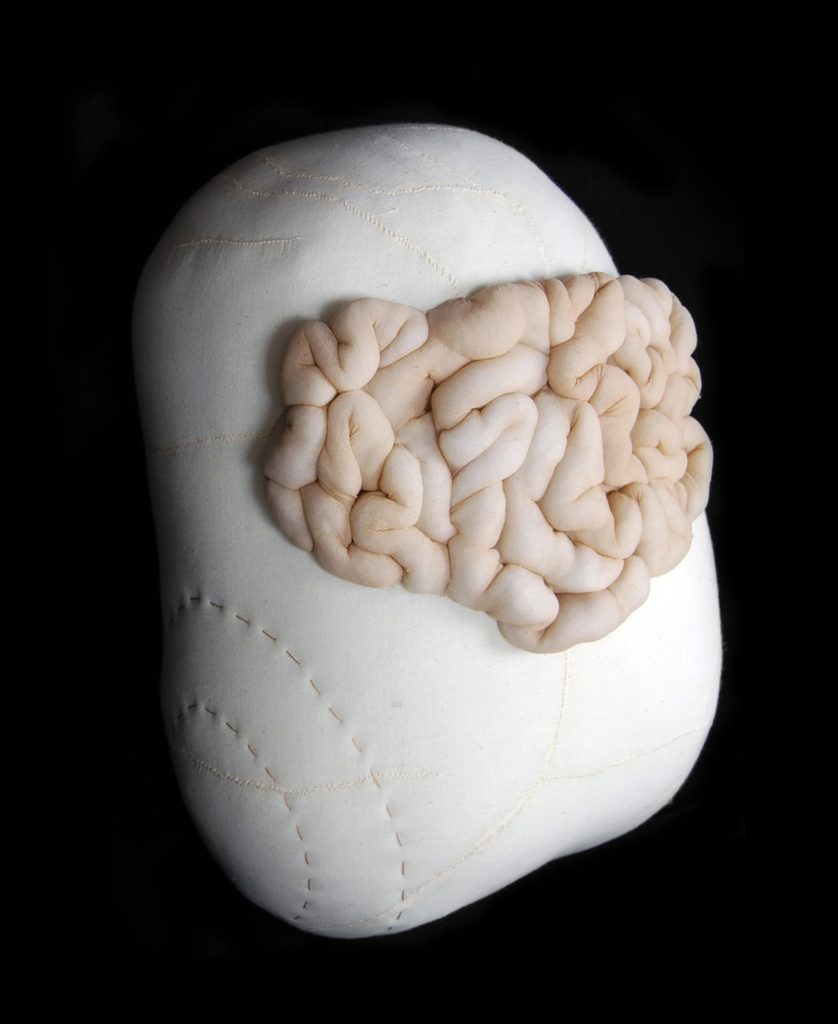
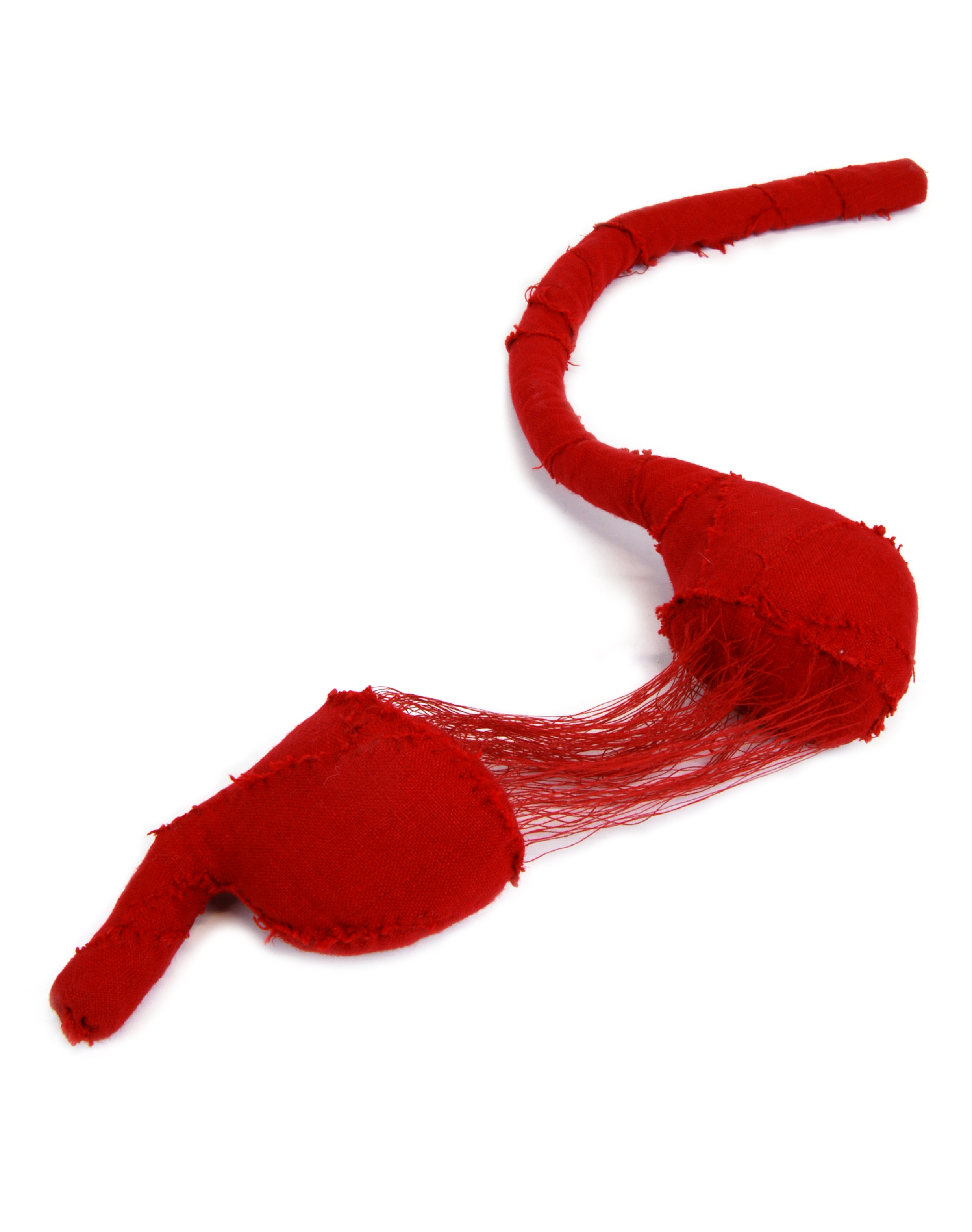
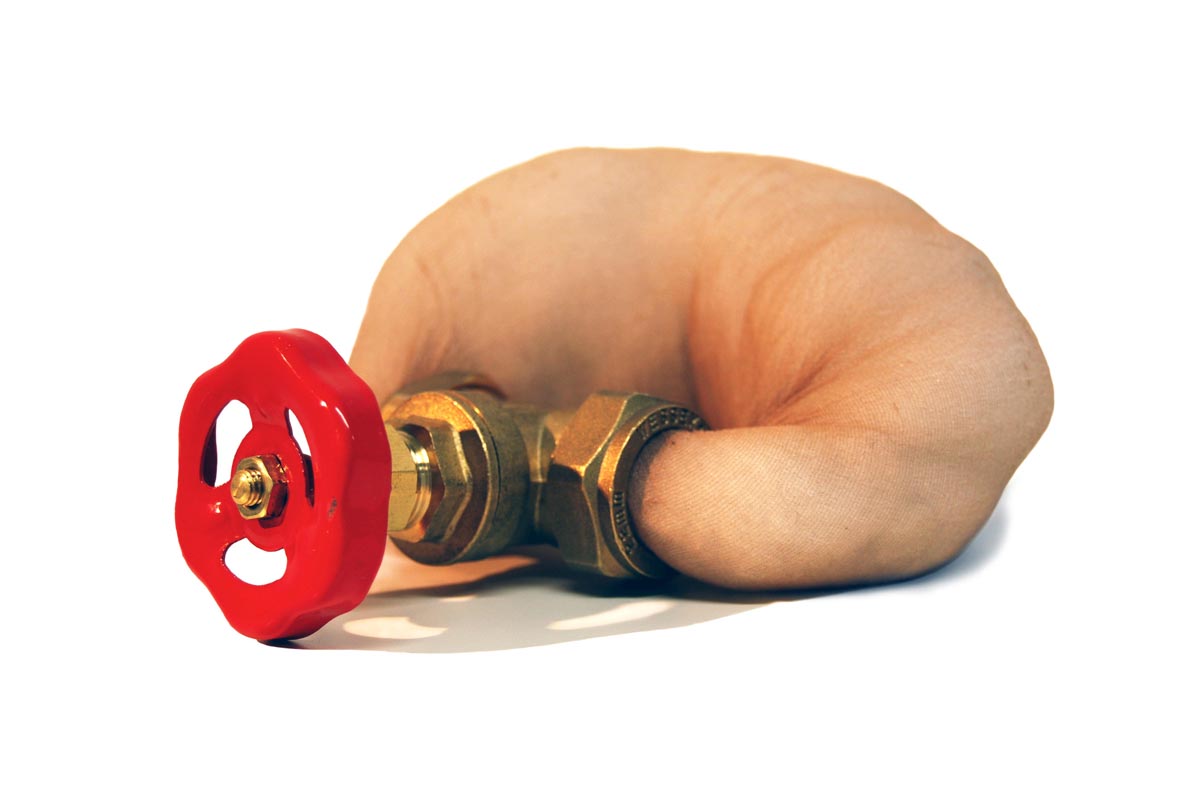
That decision became the biggest inspiration for my art. Back at university, I made a body of work exploring obesity and the materiality of the fat female body, using cloth and embroidery to explore skin, the body and the interventions we make on it.
I gave lectures and talks to university departments across the country, most notably at Oxford. My final Master’s paper was published in The Politics of Size anthology. I exhibited nationally, including in a show at the Royal College of Physicians. (I worked under my married name then, Rebecca Harris, if you want to look it up.)
In my writing I described it as coming out as a fat woman. Making the work made me vulnerable: I was admitting my fatness and owning it. I wrote about accepting the body, but also about it being OK to still want to change it.
I lost sight of that along the way. I’ve only reconnected with my own words recently.
III
Trying to prove myself
I felt a profound need to prove I’d made the right decision, cancelling a surgery I waited three years for, that I could do it myself. But life got messy. I finished my Master’s, and my marriage ended. It wasn’t until 2014/15 that I got to work.
Until then my only exercise had been the Wii Fit. Inspired by The Biggest Loser and how fast they got results, I put myself through a hellish regime. Looking back at the data, I was eating 1,200 calories a day. I took up running, joined the leisure centre and did classes morning and evening. Losing the weight became my full-time commitment.
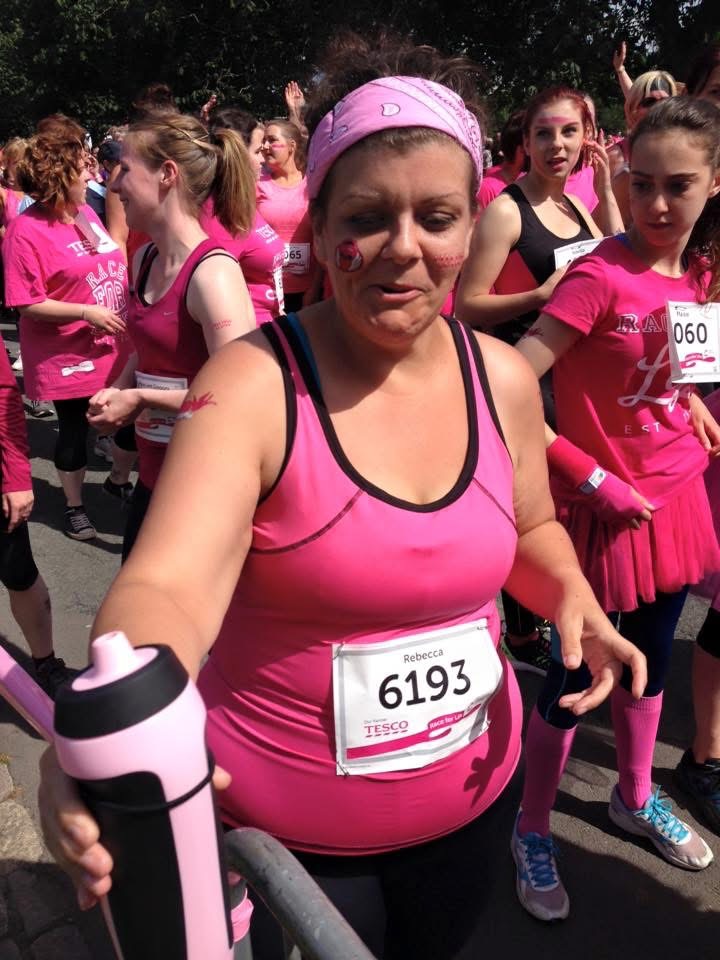
And I did it, fast. People accused me of having had weight loss surgery. Worse, I got everyone’s admiration and praise, which only fuelled me and added pressure to keep going, even though my body couldn’t cope.
I developed severe sciatica and had to stop. I was bed-bound in agony, told no exercise for three months, and put on new medication. I slid into a deep depression, and that period ended with a mental health crisis and a stay in hospital. Everything I’d lost in a year, 8 stone, came back in six months.
Starting again with £15
Here I was now, back to 23 stone, just turned 40 and feeling more miserable than ever, and still I couldn’t admit I’d ‘failed’. I left my partner and drove back to my home town with £15 to my name and an estimated 50 miles of fuel for a 70-mile journey. I stayed with my ex-in-laws and rebuilt my life: cleaning jobs, bar work and eventually supply teaching, on my feet morning, noon and night. At my size, all that activity made the weight fall off. I joined Slimming World, but the real driver was how much I was moving.
The years that followed were full of starts and stops. I was either all in or all out. Eventually I went back to running, thinking that’s what I had to do, and it aggravated my back again.
Then one evening I bent down to take off my trousers and felt a pain I didn’t know was physically possible. I’d ruptured a disc so badly it caused cauda equina syndrome and left me paralysed. There was a short window for surgery: an ambulance to one hospital, then another out of county, and emergency spinal surgery. I’ll never forget being wheeled into theatre, looking down at my feet, willing them to move, and nothing happening.
I made a full recovery. I felt like the luckiest unluckiest person alive. Two weeks later I went back to the gym just to walk on the treadmill, a symbolic sign I was recovering. As I hobbled down the steps, I missed a call from my ex-sister-in-law. When I called back, I learned my brother, my only sibling, my baby brother, had died. He was 40.
My world crumbled, and I slipped into another depression. I could have stayed there. Instead, it fuelled me. I’d felt how fragile life is in my own body. Both my parents died in their fifties. I owed it to myself, and to my brother, to take charge of my health and my future.
IV
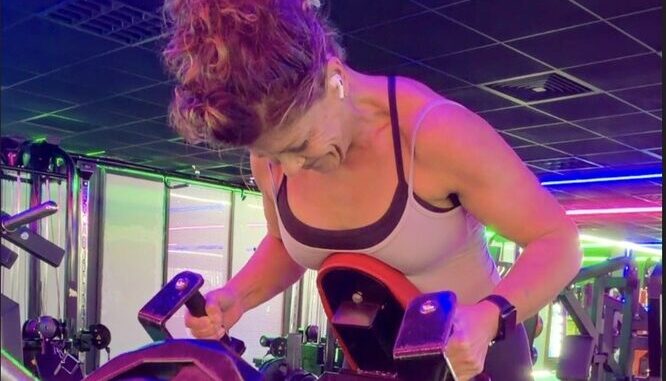
The plot twist, I picked up a weight
With my older daughters settled in Scotland and the rest of my family gone, I left Cornwall and I moved my life there. But I wasn’t settled. I was weekend binge drinking and not looking after myself. Without knowing it, I was deep in perimenopause. I was also dealing with FND, after an initial brain tumour scare. Physically and mentally I wasn’t well, but my focus was still the same: I just want to lose weight. I thought health was just about weight.
I’d done keto, intermittent and extended fasting. They worked, but I couldn’t sustain them, not with the lifestyle I was in anyway and I was regaining fast. I started wondering whether to give up and have the surgery after all.
My daughter reminded me how well I’d already done. So I asked myself what I hadn’t really tried. Weights. Running and classes scared me. I was dizzy from the FND and scared for my spine. But maybe I could lift weights up and down.
That was my plot twist: after decades of trying to shrink myself, I picked up a weight.
I told myself, give it three months. Give it everything! You can’t say it doesn’t work for you unless you give it a proper go.
I taught myself everything I needed to know, because if I was going through this I wanted every minute to count. And I hated every second at first. Some days I was shaking, some days crying, some days psyching myself up. I built a mental barrier around myself, with tactics to ease myself in. Music became my bubble. I imagined how she would carry herself, and I did the ‘fake it until you make it.’
Within weeks it stopped being a chore. The repetition, the routine and the rewards made it easier and easier. I wasn’t forcing days in any more; I was forcing days off.
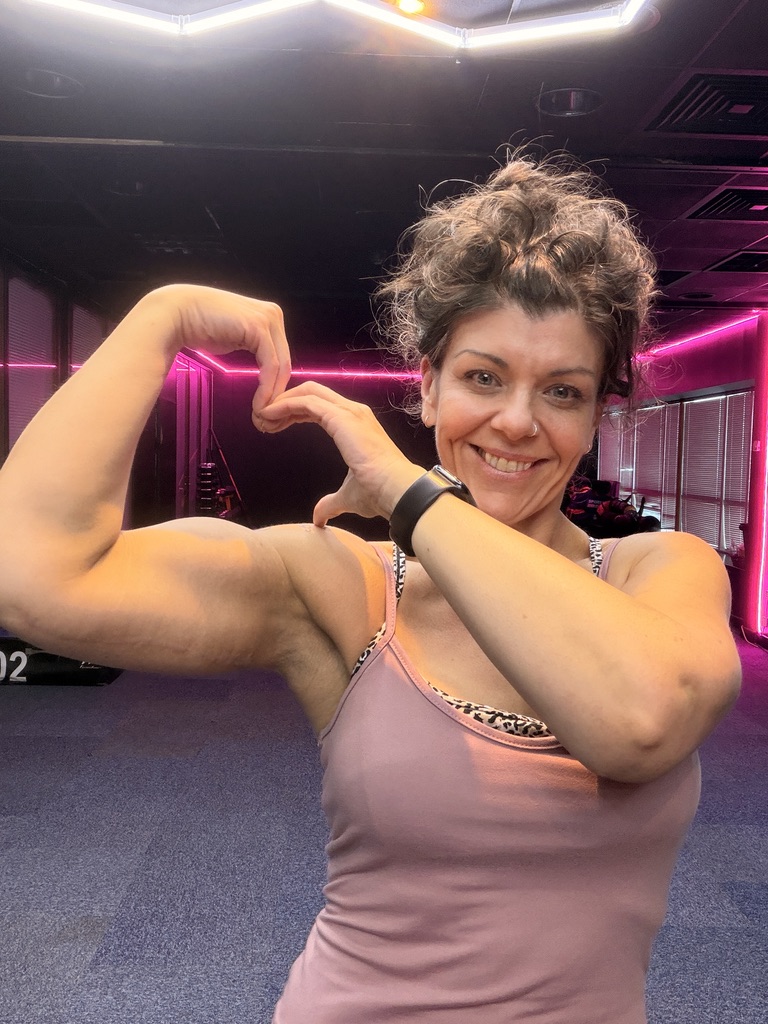
The last of the weight came off, but the most significant change was the confidence and strength I was building. Suddenly my body was part of me. I didn’t just have a body, I was a body. I was no longer living from the neck up. I fully embodied my own fucking body. The weight gave me time with my body, to focus on how strong and amazing it is. It was almost like mindful practice with a badass twist.
At 46 I started for the first time, understanding the ebbs and flows of my energy, and tuning into my hormonal cycle. Which I’m slightly embarrassed to admit, and probably why I wasn’t diagnosed with PMDD until 49.
This was my baddie era: strength forming, a hint of muscle showing. The following February I was going in for my loose skin surgeries, just six months after joining the gym, and some 12 years after cancelling that weight loss surgery. A battle I’d been fighting for well over a decade was resolved in six months.
And it wasn’t just the last of the weight and the surgeries. It felt like a symbolic journey: my old body uniting with the new one beneath it. I was finally at home in my body. The real change came the day I stopped trying to shrink and started trying to get strong. Joining the gym was the missing piece. It brought me home.
V
The honest bit
While I was recovering from surgery, uncontrollable hunger came back, probably because I had to stop HRT. Perimenopause, PMDD and hormone treatment chaos don’t leave me in a great place, and the inactivity didn’t help. I was regaining alarmingly fast.
I panicked. I’d regained quickly before, and I couldn’t lose this, not after the surgeries. So I started Mounjaro.
For the first time in my life there was silence. Is this what normal brains feel like? I could make decisions calmly. No panic, no bingeing, no constant thoughts of food: lying in bed planning what I’d eat, thinking about food while eating, wondering whether the person opposite would finish theirs.
Now of course I had dabbled in the years previously with various medications, you don’t come close to surgery and not have. But nothing ever stuck, stayed off or became effective.
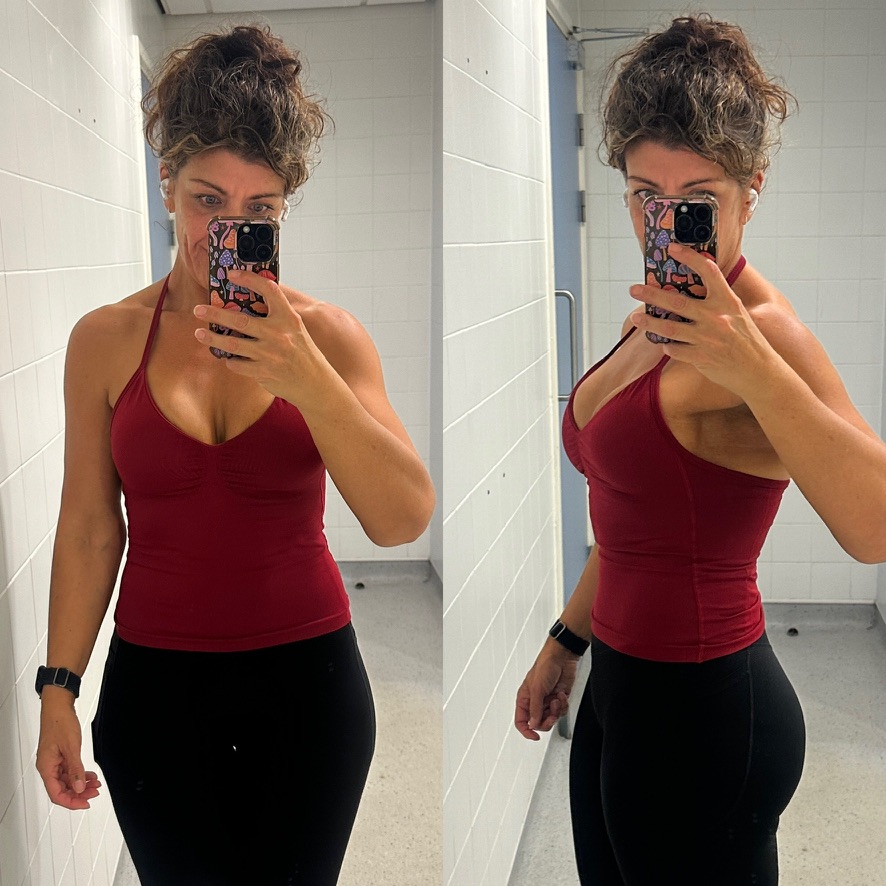
I lost the regain and a bit more. But I told myself it was temporary. People will think I lost all my weight with it. If you lost all that weight, why do you need this now? So I tried coming off it, more than once.
The noise and appetite that came back were unbearable. I white-knuckled through and accepted the regain. The effort that used to lose weight now only slowed the regain. I could barely maintain.
By now I’d qualified as a personal trainer and launched my online coaching business, yet I couldn’t hold on to my own 11 stone loss. (closer to 12 stone if I’d included and maintained the Mounjaro loss). I was feeling like a failure.
Then I asked myself: what more do I have to prove, to myself or anyone? Haven’t I done enough? I lost 11 stone after 40. I built muscle. I came home to my body and learned to celebrate it. I want to inspire others, not just to lose weight but to get strong and get baddie. Yet here I was, miserable, white-knuckling unmanageable appetite and food noise, with no quality of life.
So I let myself go back on it. Not because being bigger would be terrible, but because it gives me peace and calm. It does something in my brain that is worth every penny, and I’d happily take it for the rest of my life.
The important thing we have to note here. Losing the weight didn’t lose what got me there, or what was pulling me back. I spent most of my adult life between 20 and 23 stone. I don’t believe my hunger would have just settled after a stone or two of regain. It may have just kept going and going and going.
The message online is so often: make the lifestyle changes. But what happens when you have, and the battle still isn’t over? No one could fault my nutrition or my training. I train four to six times a week: weights, kettlebells, macebells. I’m over two years sober. I’m a qualified personal trainer who knows nutrition and energy systems. And I still struggled. If anything shows how complex obesity is, it’s that.
This is my personal experience, not medical advice. If you’re considering a GLP-1 medication, talk to your GP or prescriber.
Her destiny: the coach I became
All of this shaped the coach I wanted to be. One who doesn’t preach it’s as simple as “eat less, move more”. One who understands the complexities of hormones, trauma, genes, behaviour, biology and lifestyle. (I’ve even gone down the evolutionary biology rabbit hole, because our obesogenic environment fascinates me and our evolutionary mismatch to it.)
The biggest thing I’ve learned is that you can’t hate yourself slim. I’ve been there, and it isn’t a pretty place. I’ve discovered the hard way that hate has a way of hitchhiking along: focus that hard on disliking your body long enough and it’ll find something new to hate, even as the fat goes. Happiness isn’t waiting for you on the other side and delaying your success until you get there just leads you to a false summit.
So my coaching is about coming home to your body and building respect for it. Size and weight are just data points, if they’re part of your goal at all. The focus is what your body does, has done and can do. We look at the whole person, count success in lots of different ways, and do the deeper psychological work as part of the journey.
Then and now
I do share my before and after photos. It simply demonstrates a physical journey. That’s how I built my following, long before I became a coach, and social media runs on pictures. But I’ve come to dislike the words. “Before” makes that woman sound like a problem that got fixed. “After” suggests I’m finished, and better.
Neither is true. That woman isn’t someone I escaped. She’s the one who cancelled the surgery, packed up her life with £15 and picked up a weight. She got me here.
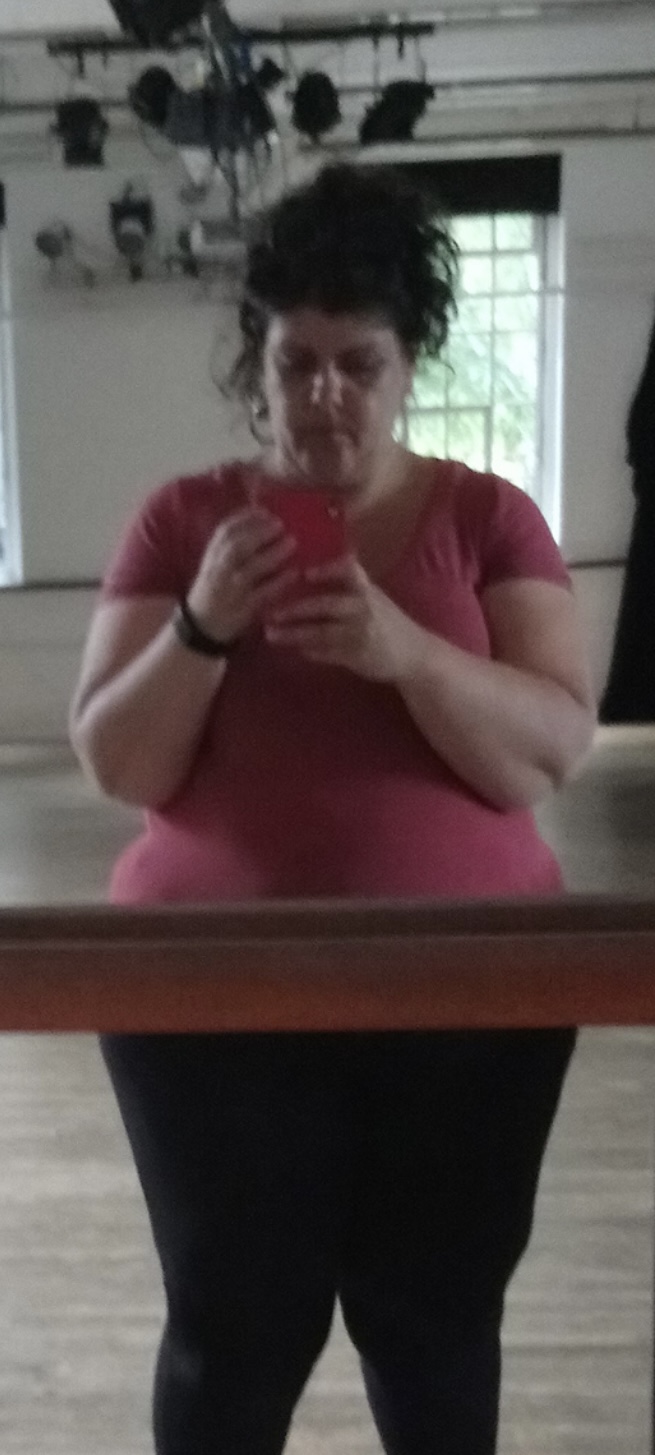
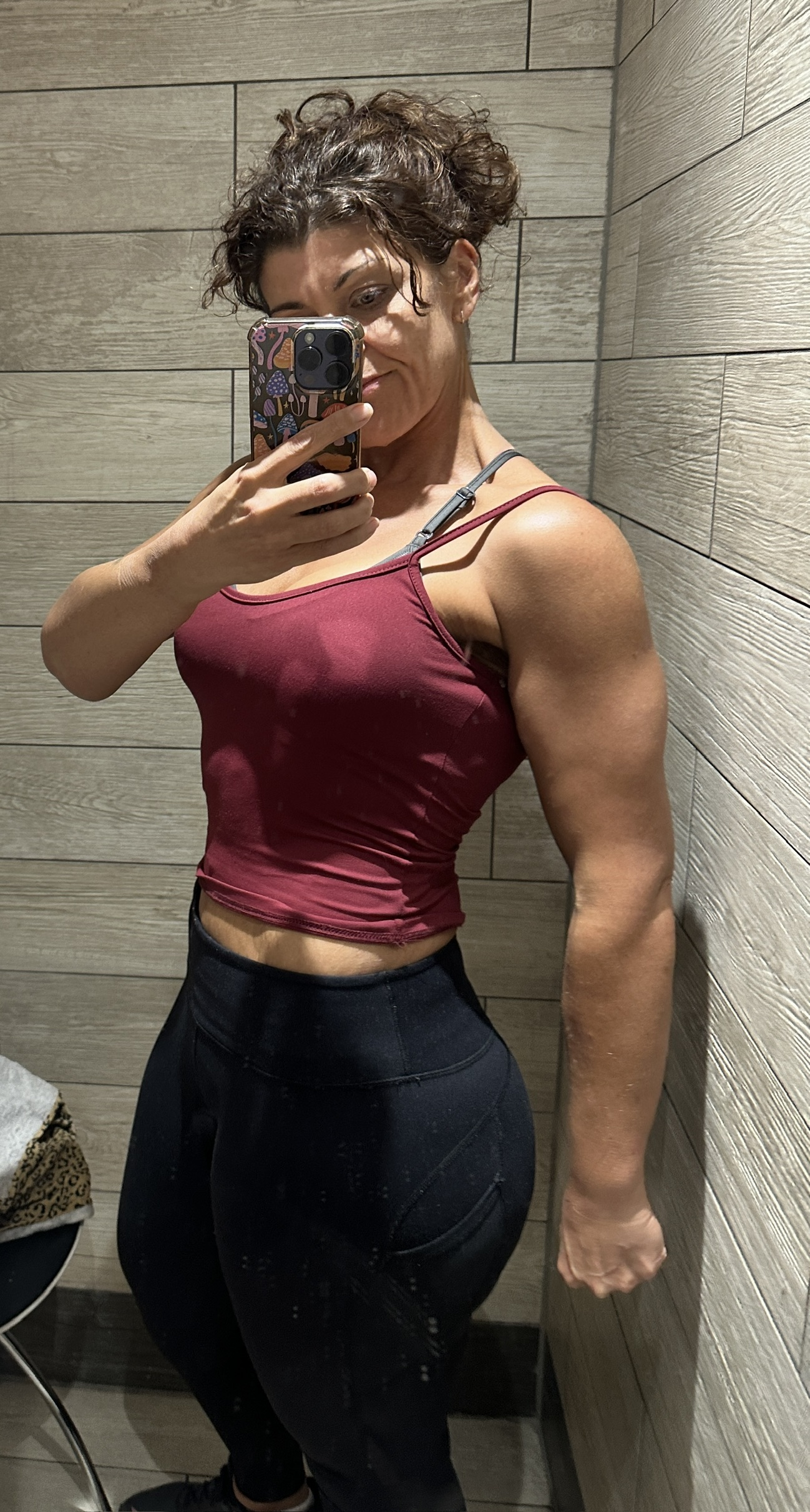
And “after” doesn’t hold still. You’ve just read how much my body has changed, even since the surgeries. If the after can change, does it turn into a new before? There is no after, because the after can change. There’s only ever then and now.
That’s why I never ask my clients for before and after photos. I’m not interested in what you’ll look like when you’re “done”. I care about how you feel in your body today.
If I could go back, I wouldn’t tell that woman to lose weight faster. I’d tell her to live: enjoy the years she spent waiting, and feel at home in her body while she was in it.
The next chapter is yours
If any of this resonates with you, Bearbell is where I help women starting out or starting over build the strength, knowledge and confidence to train on their own terms. It’s the platform I use to support you at whatever stage you’re at, with as much or as little of me as you need:
- The Foundations course to learn the basics and start training with confidence
- The Bear Den, our community, for support, accountability and belonging
- 1:1 coaching with me for fully personalised support
Wherever you start, this is where your next plot twist begins.